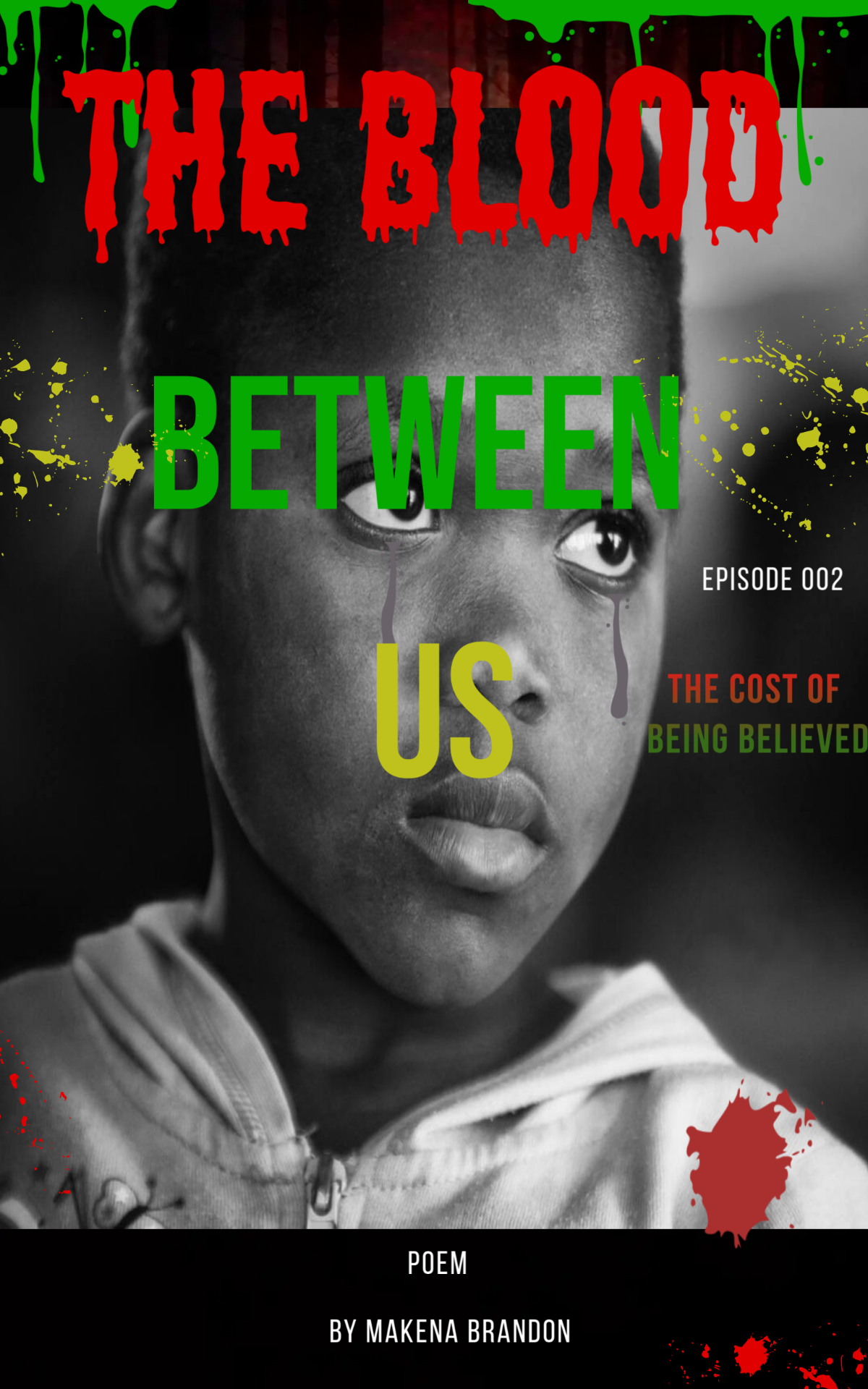
The Blood Between Us · Ep 02/09 · Speaking the Unspeakable
The Cost of Being Believed
Truth is heavier when no one helps you carry it. You hold it in your chest until it hardens.
Makena Brandon · 3 min read
Truth is heavier when no one helps you carry it. You hold it in your chest until it hardens, a quiet stone where a heart used to beat softly. You start to wonder if maybe silence was mercy after all.
They told me, 'Be brave enough to speak.' I did — and the room grew colder. Eyes turned away like I'd confessed to something indecent, like truth itself was dirt under their carpet.
They said, 'Are you sure?' and that question still echoes like a knife wrapped in politeness. When you tell your story, they don't hear what happened — they hear what it ruins.
Their peace. Their illusion. Their idea of love. They call it confusion, because admitting harm means rearranging everything they believed about safety. And so they choose not to.
They choose comfort over clarity. And you — you become the liar in your own survival story. I remember the first time I told someone I was not okay. Their smile faltered, not out of empathy —
but because my truth threatened theirs. I learned that day that honesty is not freedom — it's exile. They will call you dramatic when you bleed too loudly. They will call you ungrateful when your pain interrupts their favorite fiction.
They will say, 'But you're stronger now,' as if strength was compensation for what broke you. They will not ask what it cost to survive. Because survival stories sound prettier
when you skip the part where you almost didn't. Sometimes belief doesn't heal — it isolates you. Because once they believe, they look at you differently. You stop being the person you were
and become the story they pity. They stop inviting you to joy because you remind them of reality. They stop meeting your eyes because yours hold proof that good people can do cruel things.
So you shrink. You swallow your own history to make them comfortable again. You laugh at the right moments, you say 'it's all behind me now,'
and you pretend that healing doesn't feel like learning to walk with half a soul. At night, you rewrite the story in your mind to make it sound less inconvenient. You wonder if maybe you exaggerated,
if maybe your pain was just a misunderstanding between love and fear. That's how denial starts — not with lies, but with exhaustion. You begin to envy the silence of others, the ones who never told.
They still have families who call. They still get hugs without suspicion. You? You get whispered about. Your name becomes a warning label.
Your truth becomes a rumor you accidentally started. But here's what I've learned — Belief is not validation. You don't need a witness to make a wound real.
Scars don't ask for permission. They exist whether seen or not. One day, someone will look at you and not flinch. They'll believe without needing proof,
because they've known the same silence. They'll hold your story like a fragile inheritance, not as gossip but as gospel. Until then, you learn to hold yourself.
You learn that the truth is a living thing, and even when ignored, it breathes. You learn that being disbelieved is not erasure — it's revelation. It shows you who was capable of standing beside your pain.
And when the day finally comes that you speak again — not for their understanding, but for your release — you will taste your own name like something sacred. You will realize belief was never the goal.
The goal was voice. The goal was air. The goal was living without apologizing for the wound. And you will whisper into the mirror, as if confessing to your own reflection:
'I told the truth. That is enough.'
— Makena Brandon · Discussion Newspaper Network Publishers